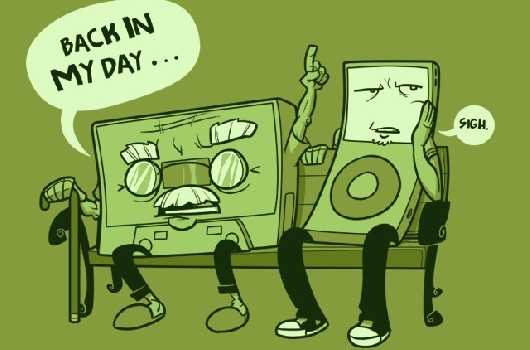
One of the problems with teaching children the music that is considered “their own culture” is determining exactly what that culture is, especially by the time they get to high school. There often seems to be a perception by teachers that what seems popular in the charts or on the radio will automatically be popular in the classroom. This is not necessarily the case, as already, children may have been exposed to a range of styles from friends, parents or media. Some may have developed specific taste preferences, whilst others may have not had the same opportunity. If you are then to teach children the music that reflects their culture, where do you begin?
David Price (2014), as well as many others, including Richard Gill (course video 8 “counterpoint”), have already said that there is not only one solution to teaching and learning. There will be as many different musical tastes in the same room as there are learning preferences; it is not a case of one size fits all. Richard Gill certainly advocated teaching an extremely wide range of music in primary schools through singing, and this should have potentially great results in preparing for high school, assuming the same children have been brought through to high school from primary school. But in so many cases, our schools have a more transient population, especially in an international school setting. If all of our children haven’t been brought through the same system, we need to think how to best cater for them in our high school classrooms.
The answer still seems to lie with guiding students to learn music through the music they already love. Music, for the most part, forms some kind of identity for a teen (King 2004) and so it makes sense to start with music that they are already familiar with (Campbell, Connell and Beegle 2007), but we, as educators also need to connect with and understand this music (Hein 2013), as well as see its value through student’s perspectives. Lucy Green (2011 ) advocates students choosing their own music and learning by ear with friends in much the same way as popular musicians learn, and this is certainly one of the ways of the Musical Futures approach that seems so successful. At the same time, I also support Richard Gill in the notion that students are at school to learn new things and therefore they also need exposure to music that will challenge and extend their learning.
References
Beegle, A., Campbell, P., & Connell, C. (2007). Adolescents’ expressed meanings of music in and out of school. Journal of Research in Music Education, 55(3), 220-236. Doi 10.1177/002242940705500304
Green L (2011), What can teachers learn from popular musicians? | UCL Institute of Education: [website] retrieved from www.youtube.com/watch?v=4r8zoHT4ExY 21st December 2016
Hein, E. (2013). Designing the drum loop: A constructivist iOS rhythm tutorial system for beginners. (Master’s thesis, New York University, NY). Retrieved from http://www.ethanhein.com/wp/my-nyu-masters-thesis/
Gill, R (n.d) Counterpoint retrieved from https://www.coursera.org/learn/music-education/lecture/7Hssp/counterpoint 21st December
Price, D. (2014). David Price on The Open Learning Revolution | Amplify 2013. [Website.] Retrieved from https://www.youtube.com/watch?v=3fGv3_kaGa8 21st December, 2016.
 Staples Music
Leave a comment